
ASSOCIATION OF PATIENT SURVIVAL WITH CLINICAL CHARACTERISTICS AND CD68/CD206 EXPRESSION FEATURES IN STAGE IIIA SQUAMOUS CELL LUNG CARCINOMA
Введение
Плоскоклеточный рак лёгкого (ПКРЛ) остаётся одной из ведущих причин онкологической смертности во всём мире. Несмотря на внедрение современных методов лечения, включая новые схемы лекарственной терапии и совершенствование хирургических подходов, прогноз при местнораспространённых формах остаётся неблагоприятным. Наиболее гетерогенной и прогностически сложной является IIIA стадия, где пятилетняя выживаемость редко превышает 30–35% даже после радикального лечения [1; 2]. В последние годы становится всё более очевидным, что опухолевое микроокружение (ОМO) играет ключевую роль в биологии немелкоклеточного рака лёгкого. Оно включает не только опухолевые клетки, но и широкий спектр иммунных и стромальных элементов, которые определяют течение болезни и эффективность терапии [3]. Среди клеток ОМО особое место занимают опухоль-ассоциированные макрофаги (TAM). Макрофаги способны выполнять различные функции: они могут участвовать в противоопухолевом иммунном ответе, но при определённых условиях - наоборот, способствовать прогрессированию заболевания, усиливая ангиогенез, инвазию и формирование иммунной толерантности [4]. Эти клетки не бывают статичными: под влиянием сигналов из опухолевого микроокружения они меняют своё состояние и занимают разные позиции между условными «провоспалительными» (М1) и «альтернативно активированными» (М2) фенотипами [5]. Для оценки макрофагального окружения в клинических исследованиях наиболее часто используют CD68 как универсальный маркер, отражающий общее количество макрофагов. Дополнительно применяют CD206, который традиционно связывают с М2-подобными клетками, вовлечёнными в иммуносупрессию и ремоделирование тканей. Однако последние исследования подчёркивают, что экспрессия CD206 не является строго специфичной: она может выявляться и при промежуточных фенотипах, что подтверждает сложность и пластичность TAM [6-8]. Таким образом, изучение экспрессии CD68 и CD206 в различных зонах опухоли (строма и паренхима) и их связи с клиническими характеристиками и выживаемостью пациентов с ПКРЛ IIIA стадии имеет важное значение для понимания биологии болезни и разработки прогностических моделей.
Цель исследования – оценить взаимосвязь выживаемости пациентов с плоскоклеточным раком лёгкого IIIA стадии с клиническими характеристиками и иммуногистохимическими показателями опухоль-ассоциированных макрофагов в строме и паренхиме.
Материалы и методы исследования
Исследование выполнено на базе ФГБУ «НМИЦ онкологии» Минздрава России (г. Ростов-на-Дону). В анализ включены клинические и лабораторные данные 31 пациента с плоскоклеточным раком лёгкого IIIA стадии. Пациенты получили первым этапом хирургическое лечение в период с 2018 по 2020 год. Для анализа прогноза пациенты были разделены на две группы в зависимости от продолжительности общей выживаемости: короткоживущие (ОВ < 42 мес.) (n = 20) и долгоживущие (ОВ ≥ 42 мес.) (n = 11). Критерием разделения послужила медиана (Me) общей выживаемости в исследуемой когорте. Таким образом, из-за малого объема выборки исследование считается ограниченным. Возраст больных, включенных в исследование, составил: в группе короткоживущих – от 48 до 71 лет (Me –64,5); в группе долгоживущих – от 58 до 68 лет (Me- 65,0). Тип хирургического вмешательства распределился следующим образом: лобэктомия - 14 случаев, билобэктомия - 5, пневмонэктомия - 12. После хирургического лечения была проведена послеоперационная адъювантная химиотерапия: в 16 случаях использовали комбинацию карбоплатина с паклитакселом (4 курса паклитаксел 175 мг/м2 в/в кап. в 1-й день + карбоплатин AUC 5-6 в/в кап. в 1-й день 1 раз в 21 день), в 12 - цисплатин с гемцитабином (4 курса цисплатин 75 мг/м2 в/в в 1-й день, гемцитабин 1000 мг/м2 в/в в 1-й и 8-й день 21-дневного цикла), в 3 - цисплатин с этопозидом (4 курса цисплатин 75 мг/м2 в/в в 1-й день, этопозид 100 мг/м2 в/в в 1, 2 и 3-й день 28-дневного цикла). Курение и наличие сопутствующей патологии (сахарный диабет 2 типа, гипертоническая болезнь) фиксировались по медицинской документации. Проводилась оценка по размеру опухоли (T) и вовлеченности регионарных лимфоузлов (N). Для патоморфологического анализа фрагменты тканей легкого фиксировали в 10% нейтральном растворе забуференного формалина в течение 24 часов. Гистологически материал проводили в автоматическом гистопроцессоре Leica ASP6025 (Германия). После заливки в парафин на станции HistoCore Arcadia (Германия) изготавливали гистологические срезы толщиной 3–4 мкм с помощью микротома Microm HM 325 с последующим их окрашиванием гематоксилином и эозином. Для иммуногистохимического исследования (ИГХ) были взяты моноклональные мышиные антитела к CD206 (Orb94710, Biorbyt Ltd., Великобритания, в разведении 1:300) и к CD68 (Kp-1, Cell Marque, США, в разведении 1:500). Для визуализации применяли систему детекции HiDef DetectionTMHRP Polymer System (Cell Marque, США). Протокол для ИГХ-исследования использовали, опубликованный ранее в статьях для исследования других показателей (топоизомеразы-2α, E-кадгерина, ki-67, р53) [7-9]. Оценка результатов иммуногистохимической реакции проводилась с применением светового микроскопа «AxioLab.A1» (Германия) при увеличении объектива х200, х400. Экспрессию CD68 и CD206 выявляли путем подсчета количества положительно окрашенных данными маркерами опухолевых клеток, приходящихся на 100 опухолевых клеток в процентном содержании в нескольких полях зрения. Статистическая обработка данных проводилась с использованием программ Statistica 13.0 (StatSoft Inc., США) и Microsoft Excel 2016. Для сравнения количественных признаков между группами применяли критерий Манна – Уитни. Категориальные признаки анализировали χ²-тестом, при нарушении условий применимости (все ожидаемые частоты ≥5) - критерий Фишера. Для оценки взаимосвязей использовали коэффициент корреляции Спирмена. При множественных сравнениях применяли поправки Бонферрони и Бенджамини – Хохберга (FDR). Статистически значимыми считали различия при p<0,05.
Результаты исследования и их обсуждение
Проведенный иммуногистохимический анализ для оценки макрофагального микроокружения опухоли выявил некоторые особенности. Подсчет окрашенных клеток маркерами CD68 и CD206 проводили в стромальном компоненте и в паренхиме опухоли (табл.). В результате было выявлено, что статистически значимые отличия в уровне экспрессии были определены только у маркера CD68 в строме. Медиана значений CD68 в строме у долгоживущих пациентов превышала в 1,4 раза (p=0,002) медиану значений данного маркера у короткоживущих больных (табл.).
Уровень экспрессии CD68 и CD206 в различных зонах опухоли
|
Маркер |
Короткоживущие пациенты Me [Q1;Q3] |
Долгоживущие пациенты Me [Q1;Q3] |
p (U-тест) |
p (Bonferroni) |
|
CD68 строма |
14.0 [10.0; 17.0] |
20.0 [18.5; 28.5] |
*0.002 |
0.556 |
|
CD68 паренхима |
5.0 [4.0; 6.0] |
6.0 [4.0; 11.5] |
0.367 |
0.163 |
|
CD206 строма |
10.0 [5.8; 13.0] |
10.0 [2.5; 15.5] |
0.600 |
0.096 |
|
CD206 паренхима |
3.5 [2.0; 5.0] |
3.0 [0.0; 7.0] |
0.852 |
0.087 |
Примечание: составлено авторами на основе полученных данных в ходе исследования.
Различия в уровне значений экспрессии CD68 в паренхиме были менее выраженными: медиана маркера у долгоживущих превышала показатель короткоживущих в 1,2 раза (6,0 против 5,0; p=0,367), что не достигало статистической значимости даже до поправки на множественные сравнения. В отношении CD206 в строме и паренхиме медианы оказались без особых различий (строма: 10,0 против 10,0; паренхима: 3,0 против 3,5; отношение медиан 1,00 и 0,86 соответственно), что не сопровождалось статистической значимостью (строма: p=0,600; паренхима: p=0,852). Таким образом, повышенная экспрессия CD68 в строме ассоциировалась с более благоприятной выживаемостью, тогда как показатели CD68 в паренхиме и CD206 в обеих зонах статистически значимых межгрупповых различий не демонстрировали.
В результате проведенного анализа заметных различий между клиническими параметрами и уровнем экспрессии исследуемых маркеров чаще всего не наблюдали. Исключением стал маркер CD68 в строме: у пациентов с коморбидной патологией его значения статистически значимо ниже в 2 раза (p=0,006), значимость сохраняется и после учёта множественных проверок (q=0,029). Для CD206 в строме при более крупных опухолях (T3–4) медиана значений в 2 раза ниже, чем при T1–2 (p=0,017), но после поправки на множественные сравнения результат уже не считался значимым (q=0,083). Аналогично, для CD206 в паренхиме у пациентов с коморбидностью медиана в 4 раза выше (p=0,029), однако после поправки статистической значимости нет (q=0,146). Связей с вовлечением лимфоузлов (N-категория), типом операции и курением ни для CD68, ни для CD206 не выявлено.
Корреляции между зонами
В результате корреляционного анализа нами была обнаружена только одна статистически значимая корреляционная связь - выраженная отрицательная корреляция между экспрессиями CD68 в строме и CD206 в паренхиме (ρ=−0,74, p=0.01) в группе долгоживущих пациентов (рис.).
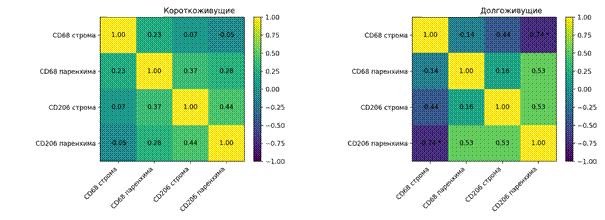

Корреляционные связи по критерию Спирмена между CD68/CD206 в разных зонах опухоли у долгоживущих и короткоживущих пациентов.
Примечание: составлено авторами на основе полученных данных в ходе исследования
Остальные парные корреляции в группе долгоживущих пациентов не имели статистической значимости и по величине колебались от слабых до умеренных: CD68строма-CD206строма ρ=−0,44; CD68паренхима-CD206строма ρ=0,16; CD68паренхима-CD206паренхима ρ=0,53; CD206строма-CD206паренхима ρ=0,53. В группе короткоживущих значимых корреляций не выявлено; коэффициенты находятся в интервале от −0,05 до 0,44, при этом наибольшие значения наблюдаются для пар CD206строма-CD206паренхима (ρ=0,44) и CD68 паренхима-CD206строма (ρ=0,37). Суммарно результаты показывают, что у долгоживущих отмечается чёткая противоположная направленность между CD68 в строме и CD206 в паренхиме, тогда как у короткоживущих преобладает слабая положительная согласованность маркеров без достижения статистической значимости.
Наши результаты подтверждают, что прогноз у пациентов с плоскоклеточным раком лёгкого IIIA стадии определяется не только характеристиками самой опухоли, но и общим состоянием организма и особенностями микроокружения. Иммуногистохимический анализ выявил, что ключевым маркером, ассоциированным с выживаемостью, является CD68 в строме опухоли. У долгоживущих пациентов медиана экспрессии была выше в 1,4 раза (20,0 против 14,0), что сохраняло значение на уровне тенденции даже после поправки на множественные сравнения. Этот результат перекликается с данными Toledo и соавт. [9], показавших, что именно стромальные макрофаги чаще выступают в роли защитного фактора, тогда как их суммарная плотность без учёта локализации менее информативна. В паренхиме опухоли CD68 демонстрировал схожее направление эффекта, но различия оказались статистически незначимыми, видимо, из-за ограниченности выборки. Экспрессия CD206 в обеих зонах значимых различий не выявила. Это подтверждает современные представления о том, что CD206 не является строго специфичным маркером М2-фенотипа, а отражает широкий спектр состояний макрофагов, зависящий от контекста опухолевого микроокружения [10; 11]. Тем не менее корреляционный анализ показал согласованность в инфильтрации различных зон опухоли макрофагами: значимая связь между CD206 в строме и паренхиме, а также ассоциация CD68 и CD206 в паренхиме. Подобные результаты указывают на пространственную связанность различных субпопуляций TAM [12; 13].
Интересным оказалось и сопоставление маркеров с клиническими характеристиками. Выявлена достоверная корреляция между уровнем экспрессии CD68 в строме и наличием коморбидности, а также связь размера опухоли (Т3-4) с экспрессией CD206 в строме. Эти наблюдения позволяют предположить, что системное воспаление и локальные морфологические особенности опухоли могут опосредованно влиять на инфильтрацию TAM, что требует дальнейшего изучения.
По данным корреляционного анализа, картина распределения макрофагов в опухоли принципиально различается у долгоживущих и короткоживущих пациентов. В группе долгоживущих выявлена выраженная обратная связь между CD68 в строме и CD206 в паренхиме опухоли (ρ=−0,74; p=0.01). Наблюдаемая отрицательная корреляция указывает на функциональное многообразие особенностей макрофагов между стромой и паренхимой: чем больше макрофагов в строме в целом, тем меньше М2-подобных макрофагов в паренхиме. Такое пространственное разведение фенотипов согласуется с более благоприятным течением болезни и может отражать стромальный «барьер» для проникновения М2-макрофагов в опухолевые гнёзда или их перепрограммирование в менее иммуносупрессивное состояние на границе опухоли. В той же группе видны умеренно положительные, но статистически незначимые связи CD68паренхима-CD206паренхима (ρ=0,53) и CD206строма-CD206паренхима (ρ=0,53), указывающие, что накопление макрофагов в паренхиме в целом сопряжено с долей макрофагов, имеющих М2-фенотип, однако этот эффект может варьироваться и, вероятно, уступает по влиянию со стороны стромы [14; 15].
В группе короткоживущих пациентов выраженной структуры взаимосвязей не наблюдается: коэффициенты преимущественно слабые и умеренные, положительного направления, без достижения статистической значимости. Такая «согласованность без противопоставления» может отражать более диффузное распределение M2-макрофагов в обеих частях опухоли одновременно, когда увеличение CD206 в строме сопровождается его ростом и в паренхиме, а общее накопление макрофагов не препятствует М2-сдвигу внутри опухоли. Таким образом, иммуносупрессия и ремоделирование тканей поддерживаются во всей опухоли, а не локализуются и не сдерживаются на уровне стромы, что согласуется с менее благоприятным исходом.
В итоге результаты указывают, что для прогноза важна не столько абсолютная плотность макрофагов, сколько пространственная координация их фенотипов между стромой и паренхимой. У долгоживущих прослеживается межгрупповое «разобщение» макрофагального пула стромы и М2-подобного сигнала в паренхиме, тогда как у короткоживущих пациентов проявляется параллельный рост CD206 в обеих зонах.
Заключение
Таким образом, у больных плоскоклеточным раком лёгкого IIIA стадии ключевым прогностическим маркером оказался CD68: более высокая плотность CD68+ макрофагов в строме достоверно ассоциировалась с лучшей общей выживаемостью. При этом корреляционный анализ выявил принципиально важную пространственную закономерность – благоприятный прогноз зависел не столько от количества макрофагов в строме, сколько от пространственной координация их фенотипов между стромой и паренхимой. Среди клинических факторов неблагоприятное влияние на выживаемость продемонстрировали пневмонэктомия и наличие коморбидности. Объединение клинических характеристик с иммуногистохимическими показателями, учитывающими как уровень CD68 в строме, так и характер его связи с CD206 в паренхиме, повышает точность стратификации риска развития и прогрессирования данной патологии.
Conflict of Interest
Funding
Bibliographic Reference
URL: https://science-education.ru/en/article/view?id=34611 (accessed: 05/09/2026).
DOI: https://doi.org/10.17513/spno.34611